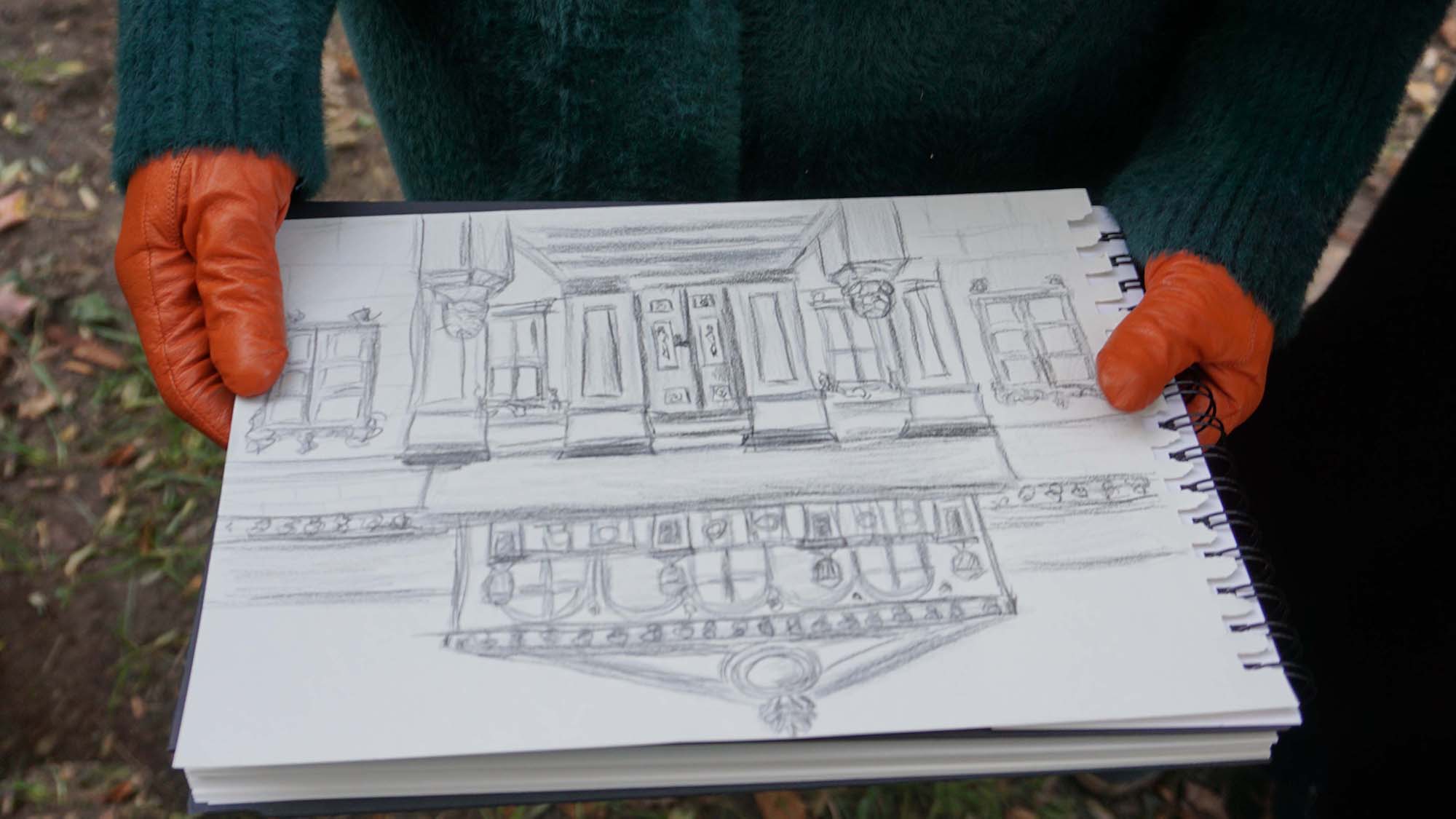
Przy ulicy Obrońców Warszawy we Wschowie od ponad 100 lat znajduje się willa Kunith – przykład miejskiej architektury rezydencjonalnej z przełomu XIX i XX wieku utrzymanej w stylistyce klasycyzującej.
Jej obecny stan wskazuje na silną degradację detalu architektonicznego. Tynki uległy zniszczeniu odsłaniając miejscami warstwę ceglaną, a elementy kamieniarskie – zwłaszcza balustrady i obramienia – noszą ślady erozji.
Zieleń, która niegdyś była istotnym elementem założenia oddzielającym przestrzeń prywatną od publicznej, całkowicie utraciła swoje znaczenie.
Na uwagę zasługuje ogrodzenie. Współcześnie zachowane fragmenty wskazują na pierwotnie dekoracyjny charakter z rytmicznie powtarzalnymi przęsłami i ornamentalnymi zwieńczeniami, precyzyjnie wykonane i spójne z architekturą willi. Obecnie – zaniedbane -ulega deformacji i degradacji.
Z zachowanych źródeł wiemy, że okna zdobiły piękne markizy. Dziś nie ma po nich śladu – „zniknęły” po 1945 roku.
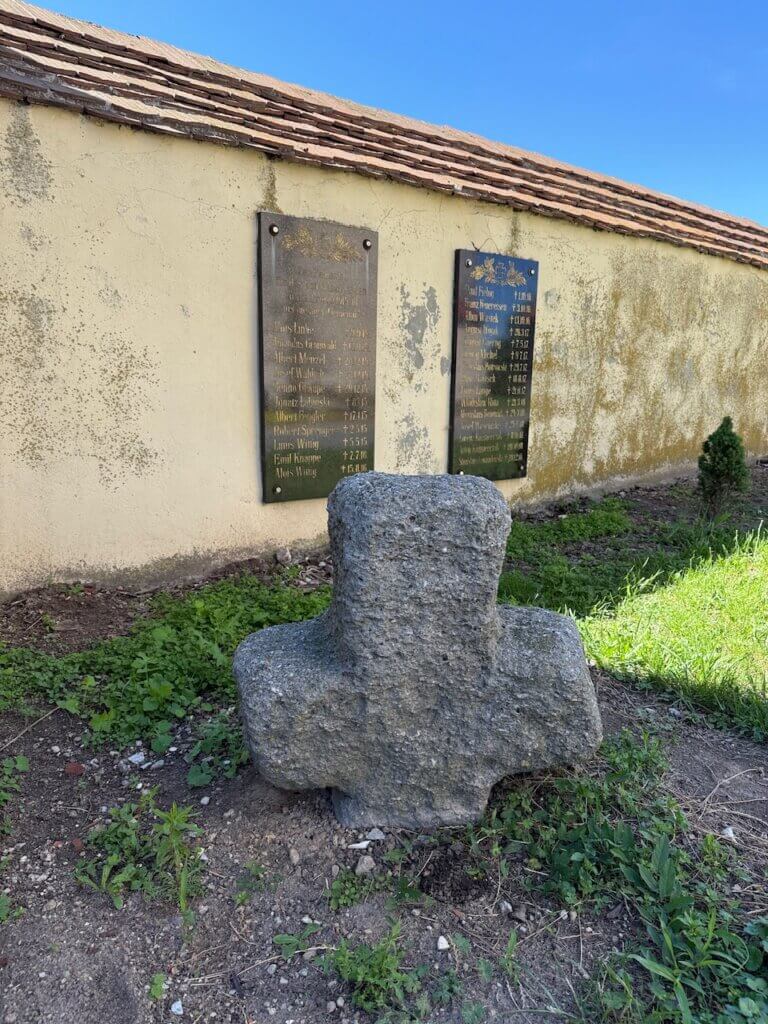
Willa była własnością braci Kunith. Oskar Kunith, którego płyta nagrobna znajduje się w Lapidarium Rzeźby Nagrobnej we Wschowie, był inżynierem melioracji (Kultur-Ingenieur). Swoją karierę związał z Wschową, projektując m.in. systemy odwadniające i irygacyjne.
Zestawienie budynku ze stanem archiwalnym – widocznym na dawnej kartce pocztowej – wyraźnie ukazuje różnice. Widać wyraźnie, jak brak dbałości o detale i ochronę dziedzictwa materialnego wpływa na wizerunek miasta. Nawet drobne elementy, takie jak fragment ogrodzenia czy detal architektoniczny, stanowią integralną część historycznej tożsamości miejsca. Ich zachowanie i ewentualna rekonstrukcja mogą przyczynić się do przywrócenia obiektowi jego pierwotnych wartości estetycznych i kulturowych.
Kartka pocztowa: zbiory Ryszard Kozłowski
Fot.: Stowarzyszenie Czas ART
🇬🇧
For over 100 years, the Kunith Villa has stood on Obrońców Warszawy Street in Wschowa – an example of urban residential architecture from the turn of the 19th and 20th centuries, designed in a classicizing style.
Its current condition reveals significant degradation of architectural detail. The plaster has deteriorated, exposing brickwork in places, while stone elements – especially balustrades and window surrounds – show clear signs of erosion.
The greenery, once an important part of the composition separating private and public space, has completely lost its original function.
Particular attention should be given to the fence. The remaining fragments indicate an originally decorative form, with rhythmically repeated sections and ornamental finials, carefully crafted and coherent with the villa’s architecture. Today, neglected, it is deformed and continues to deteriorate.
Historical sources indicate that the windows were once fitted with elegant awnings. Today, no trace remains – they “disappeared” after 1945.
The villa belonged to the Kunith brothers. Oskar Kunith, whose tombstone is preserved in the Lapidarium of Sepulchral Sculpture in Wschowa, was a drainage engineer (Kultur-Ingenieur). He worked in Wschowa, designing, among other things, drainage and irrigation systems.
A comparison of the current state of the building with its historical appearance – visible on an old postcard – clearly shows the extent of change. It demonstrates how the lack of care for details and the protection of material heritage affects the image of the city. Even small elements, such as fragments of the fence or architectural details, form an integral part of the place’s historical identity. Their preservation or reconstruction could help restore the villa’s original aesthetic and cultural value.
Postcard: collection of Ryszard Kozłowski
Photo: Stowarzyszenie Czas ART
🇩🇪
Seit über 100 Jahren befindet sich die Kunith-Villa in der Obrońców Warszawy-Straße in Wschowa – ein Beispiel städtischer Wohnarchitektur aus der Wende vom 19. zum 20. Jahrhundert im klassizistischen Stil.
Der heutige Zustand weist auf eine erhebliche Degradation der architektonischen Details hin. Der Putz ist beschädigt und legt stellenweise das Ziegelmauerwerk frei, während steinerne Elemente – insbesondere Balustraden und Fensterrahmungen – deutliche Erosionsspuren zeigen.
Die Grünanlage, die einst ein wesentliches Element der Anlage war und den privaten vom öffentlichen Raum trennte, hat ihre ursprüngliche Bedeutung vollständig verloren.
Besondere Aufmerksamkeit verdient das Zaunensemble. Die erhaltenen Fragmente deuten auf einen ursprünglich dekorativen Charakter hin – mit rhythmisch gegliederten Feldern und ornamentalen Abschlüssen, präzise ausgeführt und auf die Architektur der Villa abgestimmt. Heute ist es vernachlässigt, verformt und weiter im Verfall begriffen.
Aus historischen Quellen ist bekannt, dass die Fenster einst mit eleganten Markisen ausgestattet waren. Heute sind sie verschwunden – sie „gingen“ nach 1945 verloren.
Die Villa gehörte den Brüdern Kunith. Oskar Kunith, dessen Grabplatte sich im Lapidarium der Grabmalskulptur in Wschowa befindet, war Kultur-Ingenieur (Meliorationsingenieur). Er war in Wschowa tätig und entwarf unter anderem Entwässerungs- und Bewässerungssysteme.
Der Vergleich des heutigen Zustands mit dem historischen Erscheinungsbild – sichtbar auf einer alten Postkarte – zeigt deutlich die Unterschiede. Er macht sichtbar, wie mangelnde Pflege von Details und unzureichender Schutz des materiellen Kulturerbes das Stadtbild beeinflussen. Selbst kleine Elemente wie Zaunfragmente oder architektonische Details sind integrale Bestandteile der historischen Identität eines Ortes. Ihre Erhaltung oder Rekonstruktion kann dazu beitragen, den ursprünglichen ästhetischen und kulturellen Wert der Villa wiederherzustellen.
Postkarte: Sammlung Ryszard Kozłowski
Foto: Stowarzyszenie Czas ART